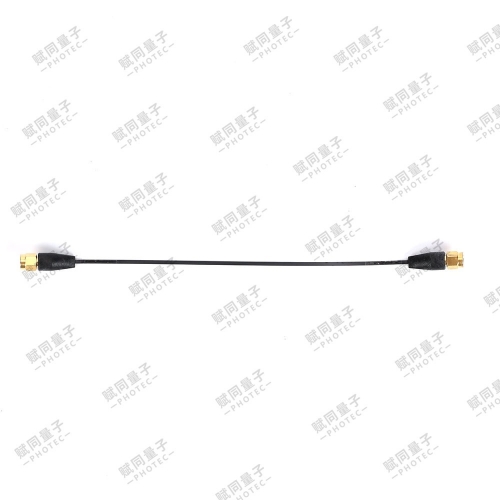
Stable-impedance, low-heat-leak coaxial wiring for RF signals in cryogenic systems.
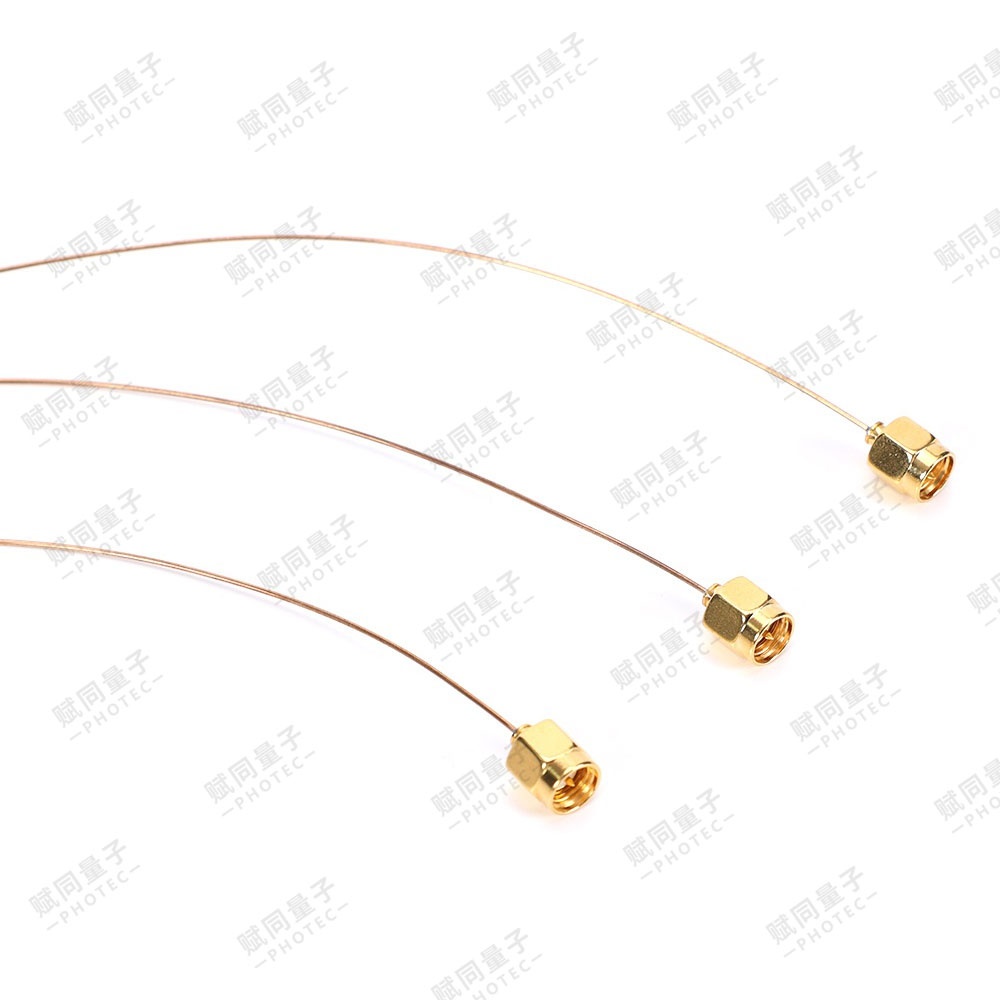
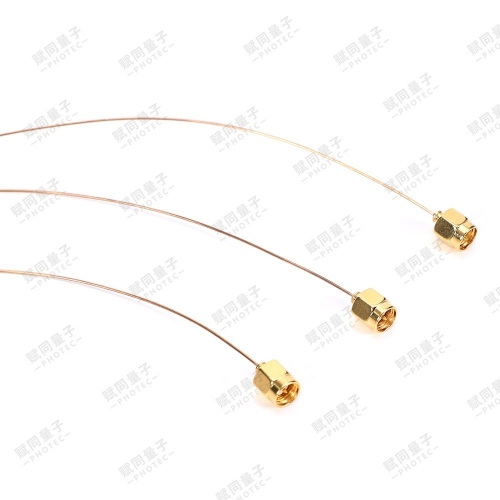
Product details
CC series · RF connections from mK–350 K
Stable-impedance, low-heat-leak coaxial wiring for RF signals in cryogenic systems.
CC semirigid coaxial cables operate from millikelvin temperatures to 350 K. Beryllium-copper and stainless-steel conductor options in 2.00, 1.00 and 0.86 mm diameters address space, thermal-load and frequency requirements.
4 typesCable and conductor configurations
50 ΩCharacteristic impedance
mK–350 KOperating temperature
≤150 cmMaximum standard length
Core capabilities
- Stable 50 Ω coaxial construction for cryogenic RF links.
- Silver-plated copper-beryllium or stainless-steel outer conductors balance loss and heat leak.
- Different diameters suit compact wiring.
- Length, connectors and installation geometry can be customized.
Technical specifications
| Model | CC-200-BeCu | CC-100-BeCu | CC-086-BeCu | CC-086-SUS |
|---|---|---|---|---|
| Outer conductor diameter | 2.00 mm | 1.00 mm | 0.86 mm | 0.86 mm |
| Outer conductor material | Silver-plated copper-beryllium | Silver-plated copper-beryllium | Silver-plated copper-beryllium | Stainless steel |
| Characteristic impedance | 50 ±2.5 Ω | 50 ±2.5 Ω | 50 ±2.5 Ω | 50 ±2.5 Ω |
| Loss at 1 GHz | 2 dB/m | 2 dB/m | 3.7 dB/m | 4.5 dB/m |
| Loss at 5 GHz | 3 dB/m | 3.4 dB/m | 9 dB/m | 11 dB/m |
| Loss at 10 GHz | 5 dB/m | 6 dB/m | 13 dB/m | 16 dB/m |
| Minimum bend radius | 5 mm | 3.5 mm | 3.5 mm | 3.5 mm |
| Operating temperature | mK–350 K | mK–350 K | mK–350 K | mK–350 K |
Applications
Cryogenic quantum-device testsConnects sample chambers to room-temperature RF instruments.
Superconducting microwave measurementsSignal transmission for resonators, qubits and related devices.
Cryogenic detector readoutCarries detector and cryogenic amplifier outputs.
Dense cryogenic systemsSelect diameter and conductor material for space and heat-load constraints.
Configuration and options
CC-200/100/086 are semirigid coaxial cables, rather than cryogenic ribbon cables. Consider frequency-dependent loss, bend radius, heat leak and connector compatibility.