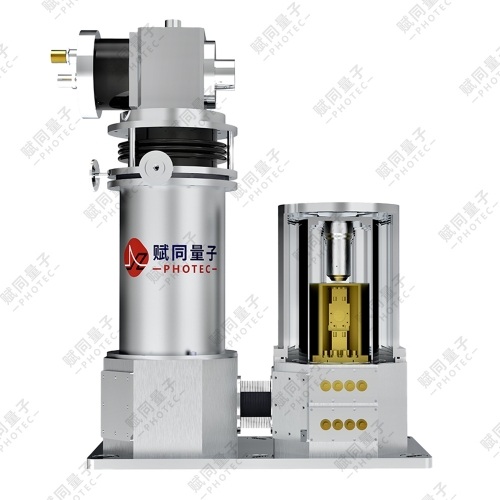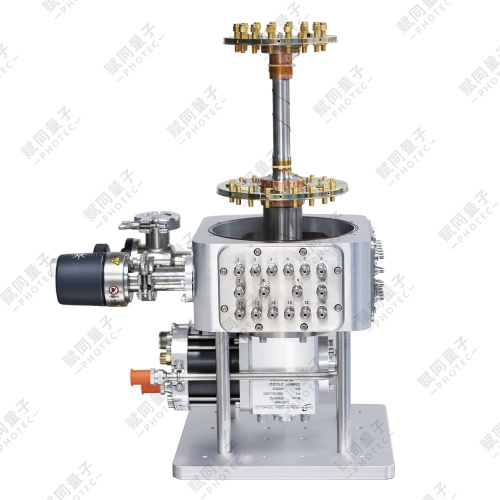
The Helium Matrix-1 K/0.3 K series supports optical, electrical and magnetic measurements at cryogenic temperatures. Configurable options include optical windows, RF and DC connections, cryogenic amplification circuits and sample holders.
Product details
Helium Matrix-1K / 0.3K · Subkelvin cryogenics
Extends closed-cycle sample environments to 850 mK or 300 mK with low vibration and multichannel measurement access.
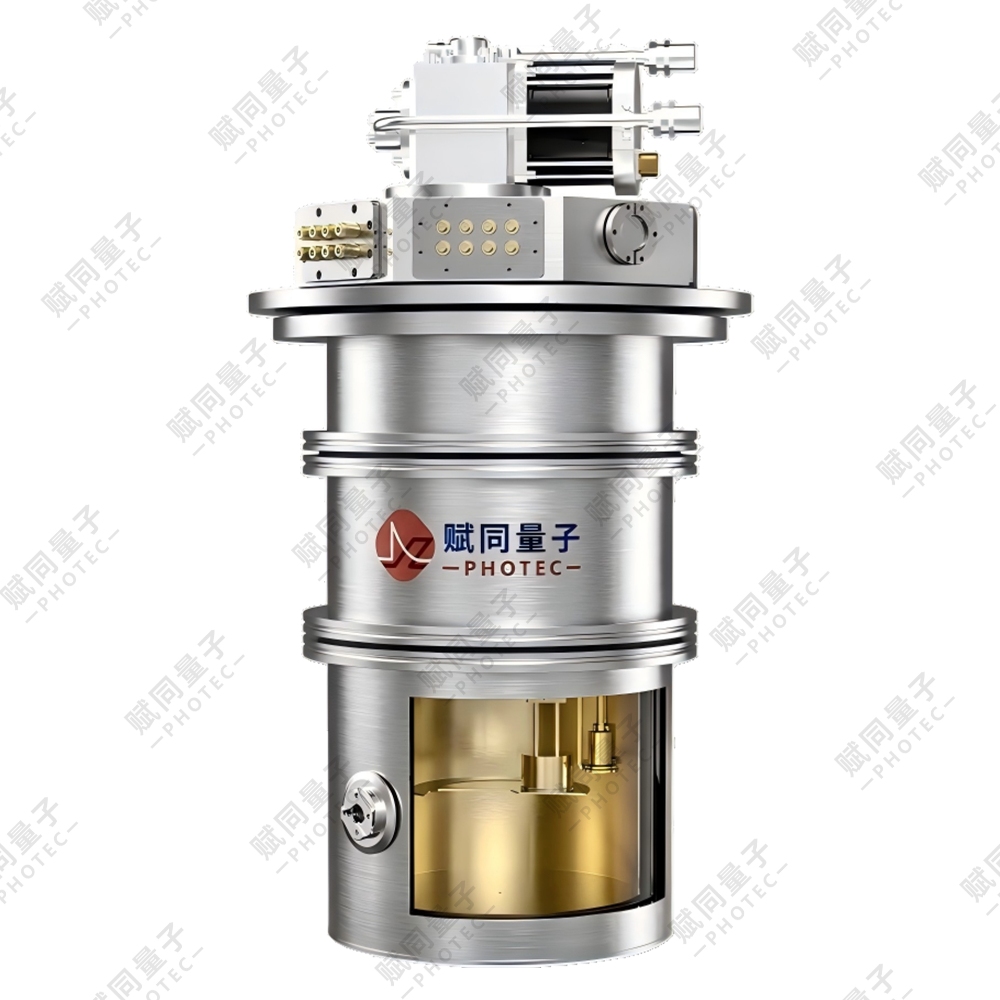
Helium Matrix-1K and 0.3K combine G-M and sorption cooling to reach subkelvin sample temperatures. Both are closed-cycle systems for electrical, optical and RF measurements of superconducting, single-photon and quantum devices.
300 mK0.3K model minimum temperature
850 mK1K model minimum temperature
100 μWCooling power at 850 mK
16Maximum RF channels
Core capabilities
- G-M and sorption cooling provide 1 K or 0.3 K class environments.
- Closed-cycle operation supports continuous 24/7 experiments without liquid helium.
- Provides a standard Ø190 × 135 mm sample space.
- Supports up to 16 RF channels, optical windows, fibers and DC interfaces.
Technical specifications
| Parameter | Helium Matrix-1K | Helium Matrix-0.3K |
|---|---|---|
| Minimum temperature | 850 mK | 300 mK |
| Cooling method | G-M + sorption cooling | G-M + sorption cooling |
| Cooling power | 100 μW @850 mK | 50 μW @350 mK |
| Temperature stability | ±25 mK | ±25 mK |
| RF channels | Up to 16 | Up to 16 |
| Optical interfaces | Fibre; up to 100 channels/windows | Fibre; up to 100 channels/windows |
| Standard sample space | Ø190 × 135 mm | Ø190 × 135 mm |
| Operation | 7×24 h continuous operation | 7×24 h continuous operation |
Applications
Superconducting single-photon detectionSubkelvin environments for SNSPDs and low-dark-count detectors.
Superconducting quantum devicesTesting of qubits, resonators and microwave devices.
Low-dimensional materials and quantum transportElectrical transport measurements at low temperature and low noise.
Single photons and quantum opticsCryogenic optical and single-photon experiments with fiber interfaces.
Configuration and options
The 0.3K model provides 50 μW at 350 mK. Usable heat load and minimum temperature are interdependent. Choose 1K or 0.3K by heat load, channels and experimental temperature.